Digital advertising is dominated by two giants: Facebook Ads Vs Google Ads. Both are powerful, both have advanced AI systems, and both can scale a business but they operate on completely different mechanics.
This deep guide explains:
- How each platform works
- Interest vs keyword targeting
- Algorithm differences
- Budget structure
- Ad placements
- Which platform suits which business
- Lead quality & conversion potential
Let’s break it down.
1. How Facebook Ads Work
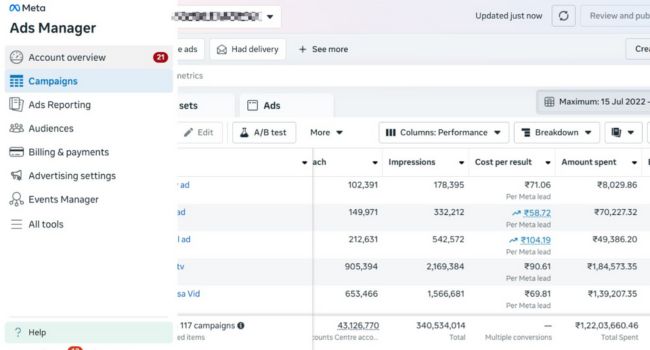
Facebook Ads are built on interest-based and behaviour-based advertising. Instead of waiting for people to search, Facebook uses its massive data network to show ads to people who look like your ideal customer.
Facebook’s Engine: Signals + Machine Learning
Facebook doesn’t need keywords.
It predicts who is likely to perform your desired action based on:
- Interests
- Behaviours
- Engagement style
- Past purchases
- Pages followed
- Video watch time
- Location
- Demographics
- Lookalike modelling
- Pixel events from your website
- User behaviour across Instagram, Messenger & partner apps
This means Facebook is discovery-based it shows ads even if people aren’t actively looking.
Deep Example
If a person:
- Watches fitness reels
- Saves gym photos
- Follows diet pages
- Engages with protein brands
Facebook instantly categorises them as a fitness-intent user without them searching for “gym” or “fitness supplements”.
Your ad reaches them before the need even becomes urgent.
2. How Google Ads Work
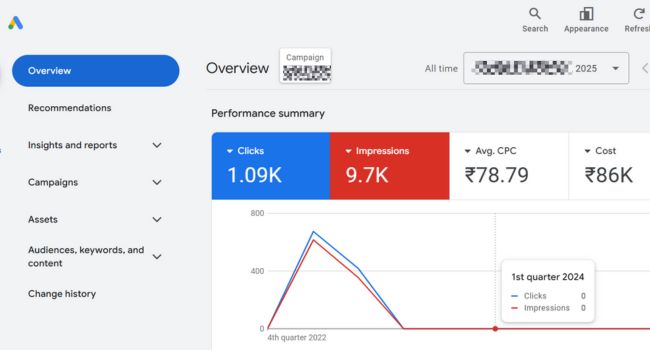
Google Ads operate on search behaviour meaning users already show intent.
Google’s Engine: Keywords + Intent + AI
Google uses three main pillars:
- Keywords
- Search intent (what people are trying to do)
- Quality Score (ad relevance + landing page experience)
Users type something Google matches that query with advertisers bidding on similar keywords.
This makes Google Ads vs Facebook Ads a comparison between intent vs behaviour.
Keyword Match Types (Critical Part)
Google uses three match types that influence reach, accuracy, and cost:
1. Broad Match
Google shows your ad for variations, synonyms, and related intent.
High reach, low control.
2. Phrase Match
Ad shows when user types phrases containing your keyword.
Balanced.
3. Exact Match
Shows only if user searches exactly the term.
High precision, expensive, best for conversions.
Deep Example
If someone searches:
- “hire a tax consultant near me”
- “best VAT accountant UK”
- “company tax return help”
Google matches that to your keyword list and shows your ad at the perfect moment. This makes Google intent-driven, not behavior driven.
3. Targeting: Interests vs Keywords

Facebook Targeting = People Based
- Interests
- Online activity
- Behaviour
- Lookalikes
- Custom audiences
- Your website visitors
- Your Instagram engagers
Facebook delivers your ads to users who are likely to convert based on their behaviour.

Google Targeting = Search Based
- Keywords
- Search queries
- Customer lists
- Device type
- Location
- In-market audiences
- Remarketing audiences
Google doesn’t guess the user directly tells Google what they want
4. Algorithm Updates (2024–2025 Behaviour)
Facebook Updates Focus On:
- Removing detailed interest options
- Heavy use of AI for broad targeting
- Prioritising high-quality creative
- Strong learning phase for optimisation
- Deep integration with Instagram Reels & video formats
Facebook now depends more on machine learning and less on manual interest targeting.
Google Updates Focus On:
- AI-based campaigns like Performance Max
- Broad match + Smart bidding
- Understanding intent through AI instead of just keywords
- Improved ad rank systems
- Enhanced conversion modelling
Google is becoming a predictive search engine, not just keyword-based.
5. Budgeting: How Costs Work Deeply
Facebook Budget Structure
- CPC is lower
- CPM is lower (cheap to reach 1,000 people)
- Best platform for small budgets
- Creative takes a bigger role than bidding
- Budget directly influences learning phase performance
- Good for cold traffic + retargeting
Google Budget Structure
- CPC is higher, especially for finance, real estate, legal, accounting
- You pay for search intent hence more competition
- Budget is controlled by bids, quality score, and keyword difficulty
- Works best when budgets are consistent
- Fewer leads but higher quality
Deep Reality: In competitive industries (accounting, legal, plumbers), Google Ads may cost £5–£40 per click, but those clicks convert extremely well.
6. Ad Placements
Facebook Placements
Appears on:
- Facebook feed
- Facebook stories
- Instagram feed
- Instagram reels
- Messenger
- Audience network (apps & websites)
- Explore page
- Facebook video feed
These placements are excellent for visibility, engagement, storytelling, and retargeting.
Google Placements
Appears on:
- Google Search results
- YouTube videos
- Display network (millions of websites)
- Google Shopping
- Gmail promotions
- Google Maps
- App campaigns
Google covers the entire search + browsing ecosystem.
7. Which Platform Works Best for Each Business?
Best for Service Businesses (Accountants, Lawyers, Plumbers, Doctors)
Google Ads Wins
Because customers search directly for the service.
Best for Ecommerce
Both work well:
- Facebook = demand generation + retargeting
- Google Shopping = high-intent purchase traffic
Best for Real Estate
Google for leads
Facebook for retargeting site visits + project awareness
Best for Local Stores
Google Maps + Local search
Facebook for community promotions
Best for Course Creators, Coaches, Consultants
Facebook = interest targeting
Google = search intent for ready buyers
8. Lead Quality & Conversion: Which Is Better?
Facebook Lead Quality
- Cheaper
- Lower intent
- More leads but fewer serious buyers
- People are not searching; they’re responding to the ad
- You must nurture them with retargeting
- Forms convert easily but quality varies
Google Lead Quality
- Very high intent
- Higher conversion rate
- Fewer leads but better business clients
- Works extremely well for industries where trust matters
- Users take action fast they’re searching for the service
Businesses with high-ticket services (accounting, legal, real estate, finance) should prioritise Google Ads first, then use Facebook for retargeting.
Frequently Asked Questions
1. How much do 1000 clicks cost on Facebook?
The cost varies by industry, audience, and competition. On average, 1,000 clicks on Facebook can range from £150 to £400, depending on targeting and ad quality.
2. How much does 1000 clicks cost on Google Ads?
Google Ads generally costs more because users have higher buying intent.
1,000 clicks can range from £300 to £900+, depending on your industry (legal, finance, marketing, home services, etc.).
3. How much does Google Ads cost per 1,000 impressions (CPM)?
Google Display Network CPM typically ranges from £2 to £10, while YouTube CPM can range from £5 to £15.
4. Which platform is best for running ads?
Both are strong but for different goals.
- Google Ads = high intent leads, faster conversions
- Facebook Ads = better targeting, awareness, cheaper reach
The best platform depends on your business goals.
5. Which is better, Google Ads vs Facebook Ads?
Google Ads is better for people ready to buy.
Facebook Ads is better for creating interest and building demand.
A mix of both usually gives the best results.
6. Is $10 a day enough for Google Ads?
Yes, it’s enough to start especially for testing keywords and gathering data.
But competitive industries may require $20–$50/day for stronger results.
Final Thought
When comparing Facebook Ads vs Google Ads, there’s no “one best platform” only the best platform for your business goal. If you want to capture people already searching and ready to buy, Google Ads wins. If you want to build awareness, target interests, and create demand, Facebook Ads delivers incredible reach. The smartest businesses often use both together to maximise visibility, generate warm leads, and increase conversions.
Want to run high converting Facebook Ads or Google Ads for your business?
I can set up the strategy, creatives, targeting, and optimisation so you get real leads not just clicks. Contact Us today and let’s grow your business with smart ads.